

25 Indoor Obstacle Course Ideas for Endless
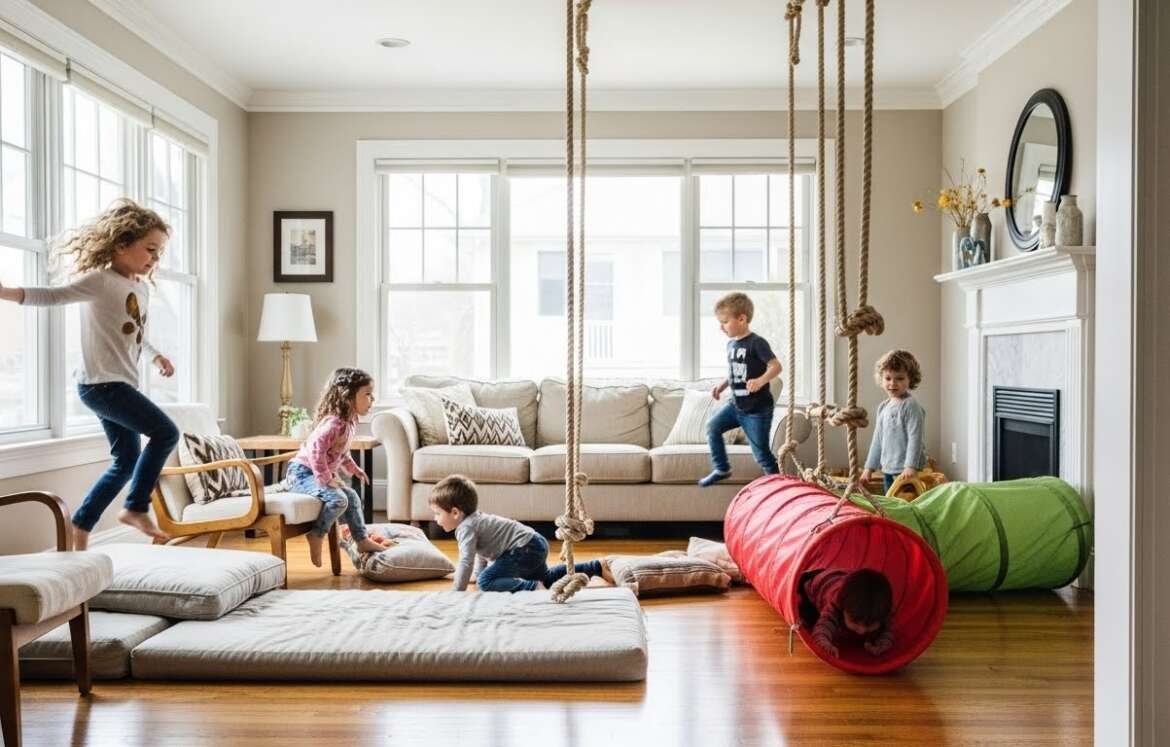
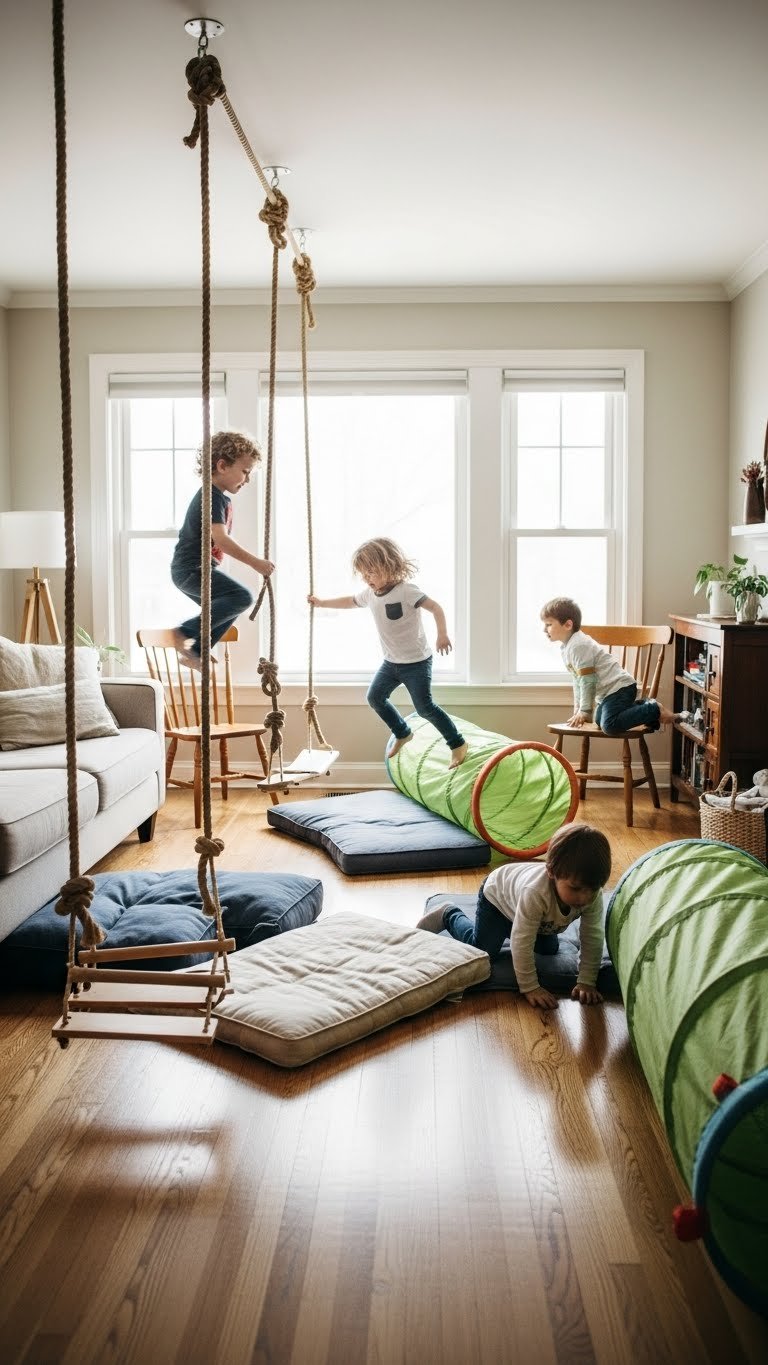 Indoor obstacle courses turn everyday spaces into active play zones without expensive gear. They help burn energy, spark creativity, and make indoor time fun for kids and adults alike. You can build one with items already at home. Chairs, pillows, tape, and boxes become tools for movement and laughter. This list shares simple, affordable ideas that fit apartments, houses, and classrooms. Each setup focuses on action, safety, and flexibility. Rearrange, repeat, and adjust based on space and age. You do not need fancy equipment. You just need a little imagination and willingness to move.
- Cushion Hop Path
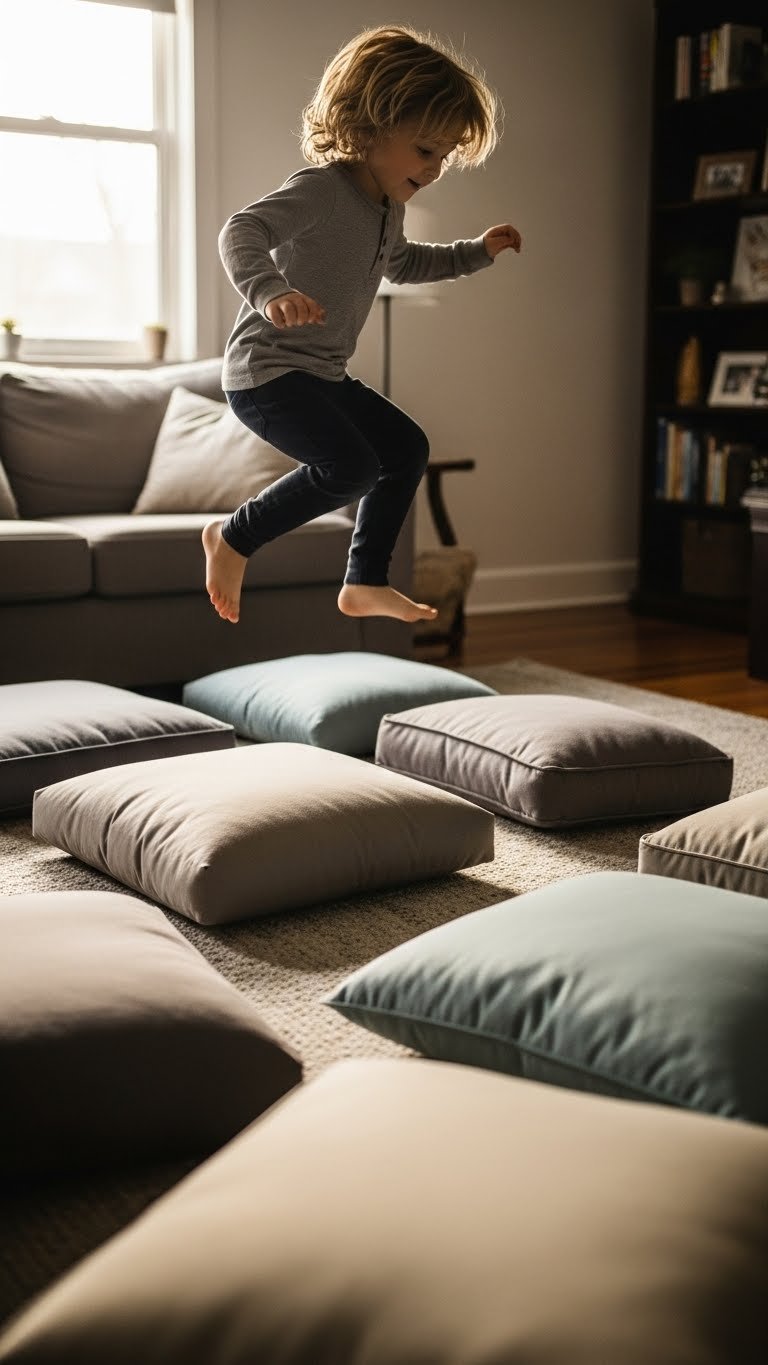
Lay couch cushions across the floor like stepping stones. Space them close for younger kids. Spread them out for older ones. The goal is simple. Jump from cushion to cushion without touching the floor. This works well in small rooms. It also helps balance and coordination. Use different cushion sizes to add variety. Firm cushions wobble less. Soft ones add challenge. If cushions slide, place a rug underneath. That keeps things safe and stable. To change it up, add rules. Hop on one foot. Pause for three seconds on each cushion. Clap twice before the next jump. These small twists keep kids interested. This setup costs nothing. It packs away fast. It also works as a warm-up station in a longer course. Cushion hops are gentle on joints and great for all ages.
- Chair Tunnel Crawl
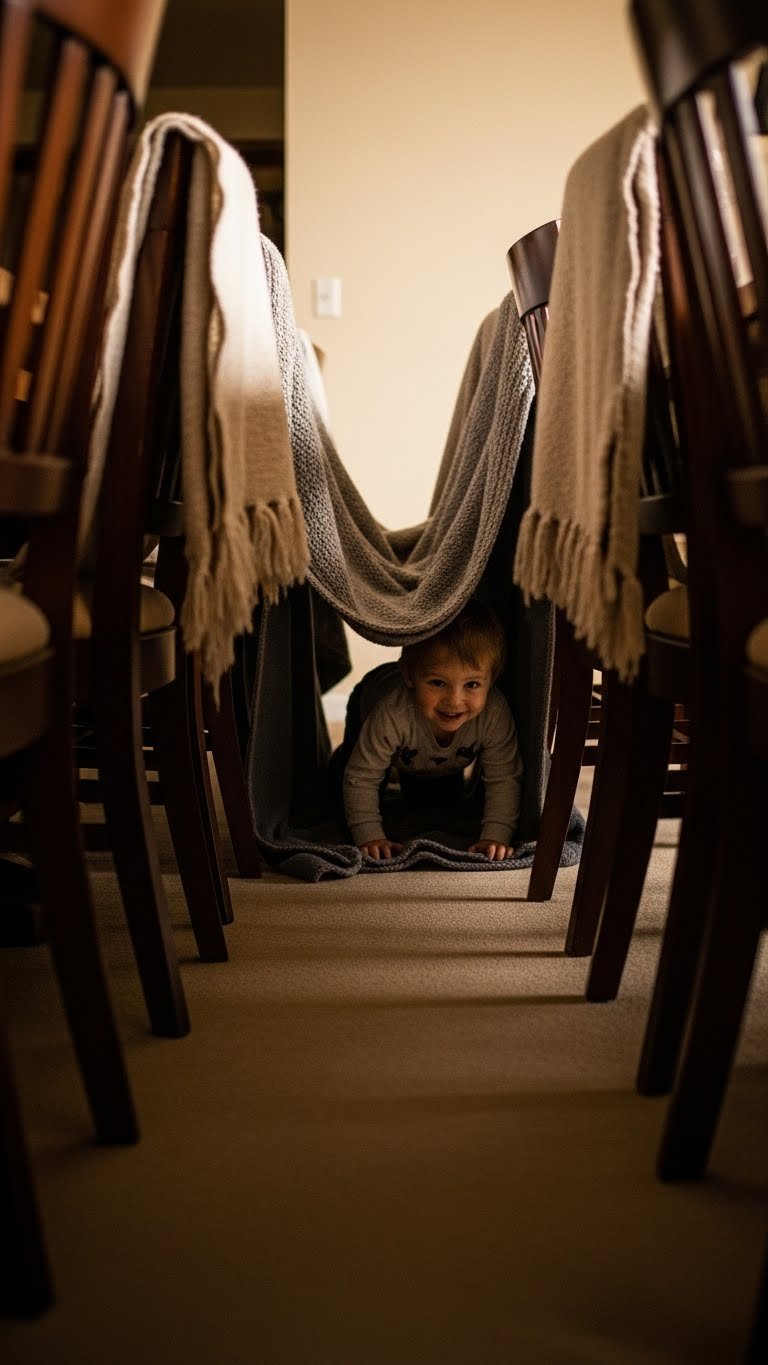
Line up dining chairs in two rows. Drape blankets or sheets over the tops. This forms a crawl tunnel. Kids move through on hands and knees. It builds strength and body control. Keep the tunnel short for beginners. Add more chairs for longer crawls. Use lightweight blankets so they do not slide off easily. Tuck the ends under chair legs for stability. You can add tasks inside the tunnel. Place a soft toy at the end to grab. Ask kids to crawl backward on the return. These changes add fun without extra cost. This station works well in hallways or open rooms. It stores easily once playtime ends. Chair tunnels turn basic furniture into active play gear.
- Tape Balance Line
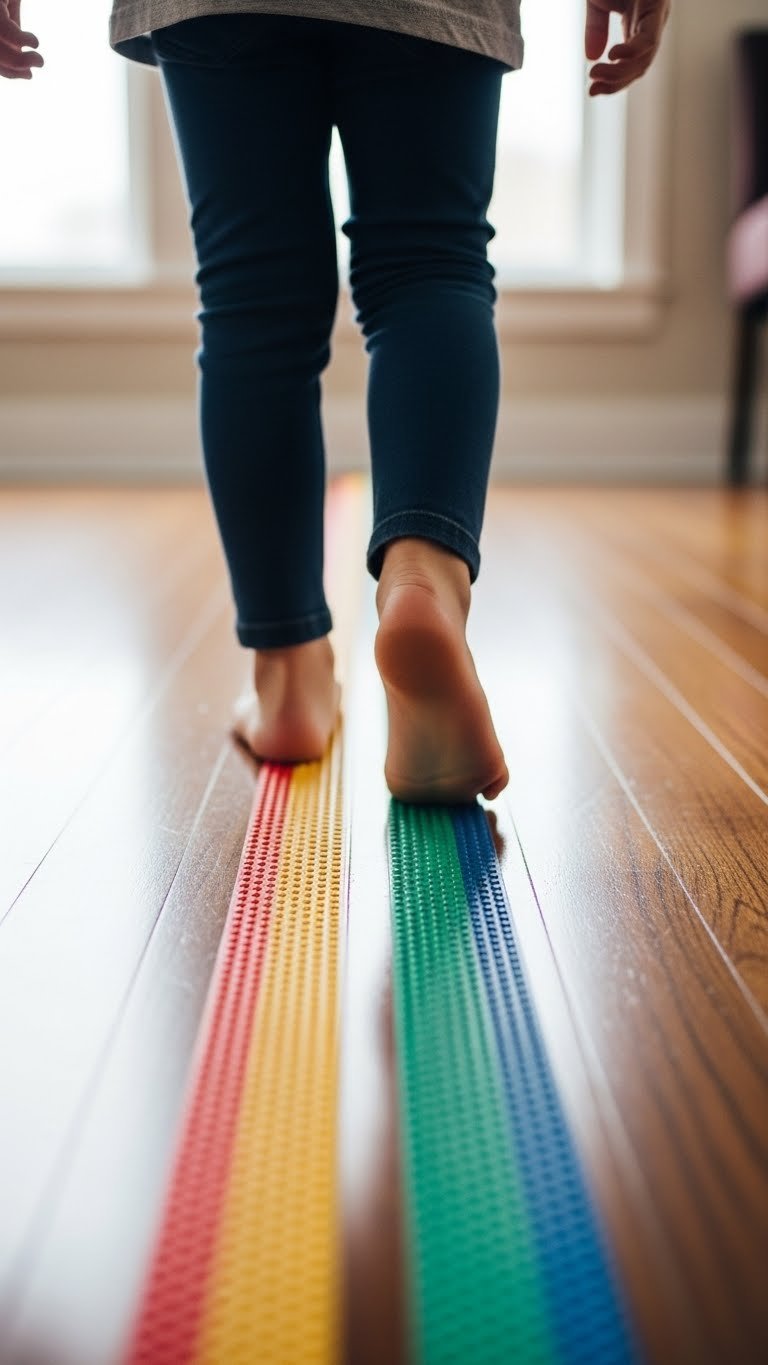
Use painter’s tape to create lines on the floor. Straight lines are a good start. Curves add challenge. Kids walk heel to toe along the tape. Arms out for balance. Painter’s tape removes cleanly and costs little. You can make zigzags, loops, or figure eights. Keep lines wide for beginners. Narrow them later for more control work. Add simple rules. Walk backward. Hold a book on the head. Pause at corners. These ideas keep the activity engaging. This station fits any space. It also works well between high-energy sections. Tape balance lines help slow things down while still keeping kids active.
- Pillow Mountain Climb
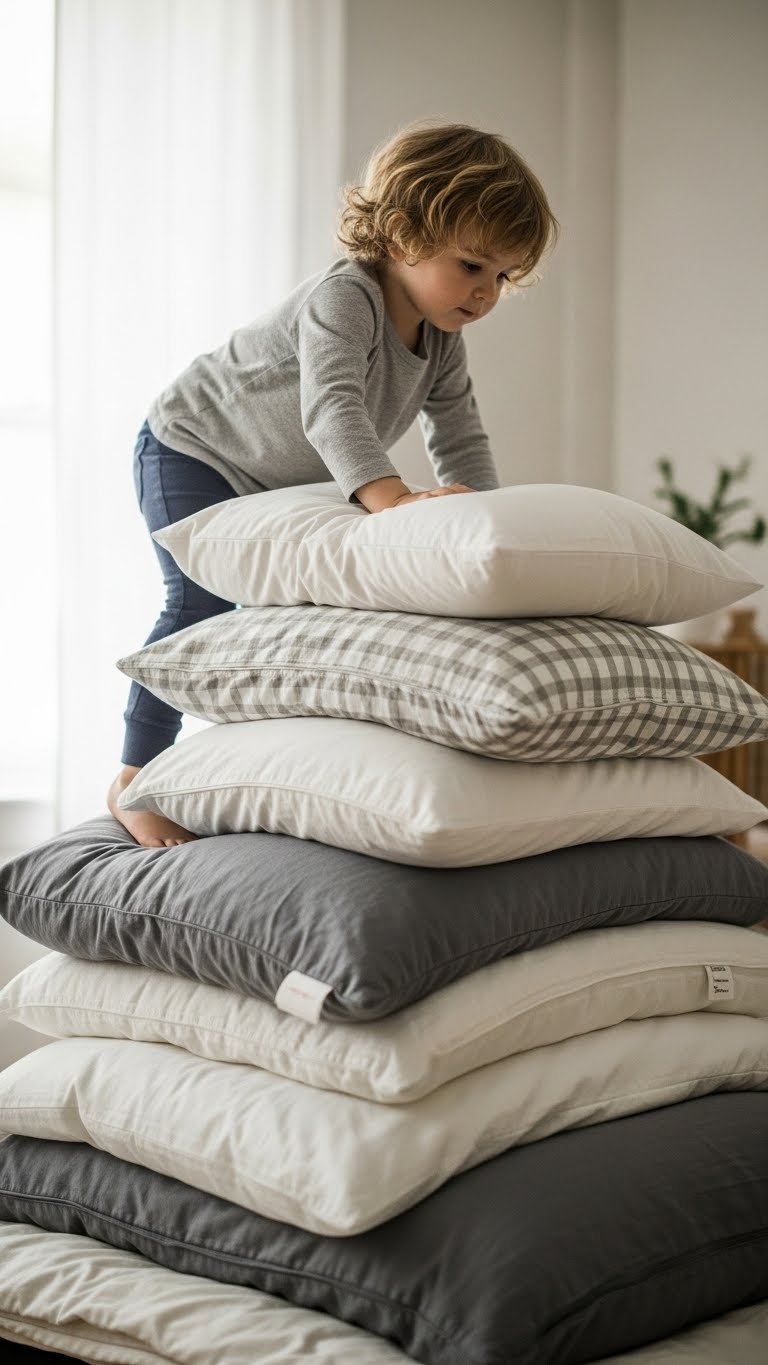
Stack pillows into a low mound and let kids climb over it. This simple station encourages slow, careful movement and problem-solving. Use large pillows at the bottom and smaller ones on top. Keep the height low for safety. Place a rug or mat under the pillows to prevent slipping. Kids can climb, crawl, or step across. You can ask them to move slowly like a turtle or quietly like a cat. These small changes keep it fun. Pillow mountain climbs help with leg strength and balance. They also add texture and variety to the course. Best of all, pillows are already in most homes. When playtime ends, everything goes back on the bed or couch.
- Box Step Challenge
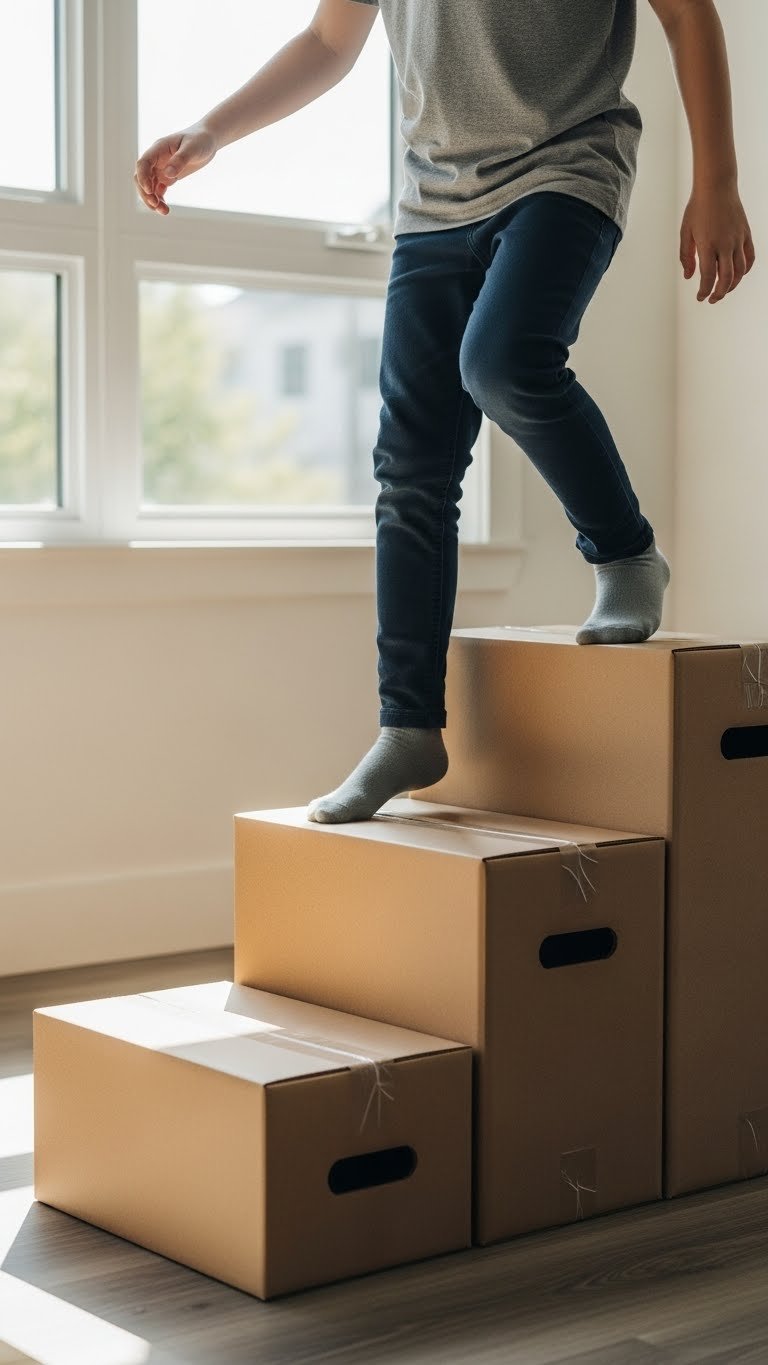
Collect sturdy cardboard boxes and tape them shut. Arrange them like steps or platforms. Kids step up and down in order. This works leg muscles and improves coordination. Keep the boxes close together for younger kids. Spread them out or change heights for older ones. Always test each box first to make sure it holds weight. Place boxes near a wall for added support if needed. Add fun rules like stepping only on certain colors or pausing on each box for a count of three. This station is a great way to reuse delivery boxes before recycling. It adds height changes to your course without any cost.
- Laundry Basket Toss Stop
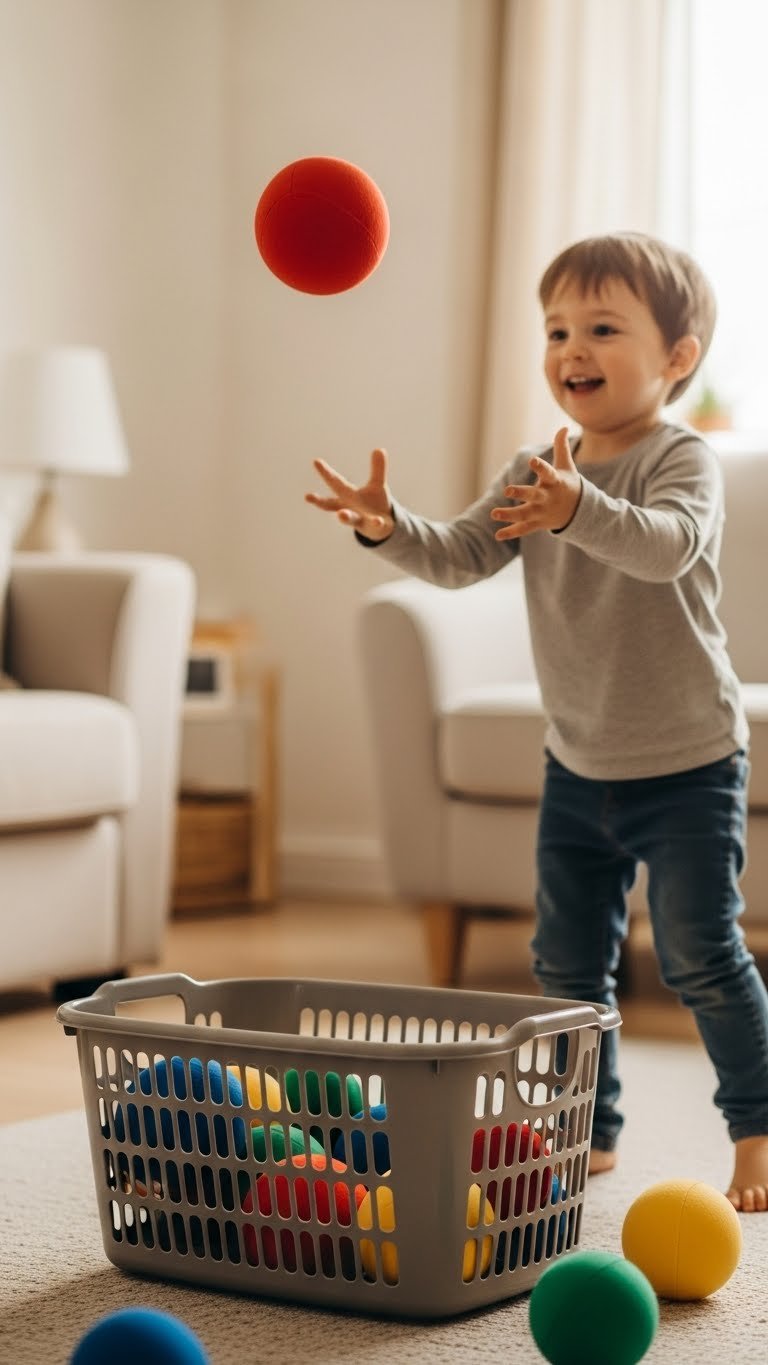
Place a laundry basket at one end of the room and give kids soft balls or rolled socks. They toss the items into the basket before moving to the next station. This adds a fun pause that still keeps them active. Mark a throwing line with tape. Younger kids stand close. Older kids step farther back. You can set goals like making three successful tosses before moving on. This station helps with hand-eye coordination and focus. It also slows the pace slightly, which helps kids catch their breath. Everything used here is already in most homes, and cleanup takes seconds.
- Table Slide Crawl
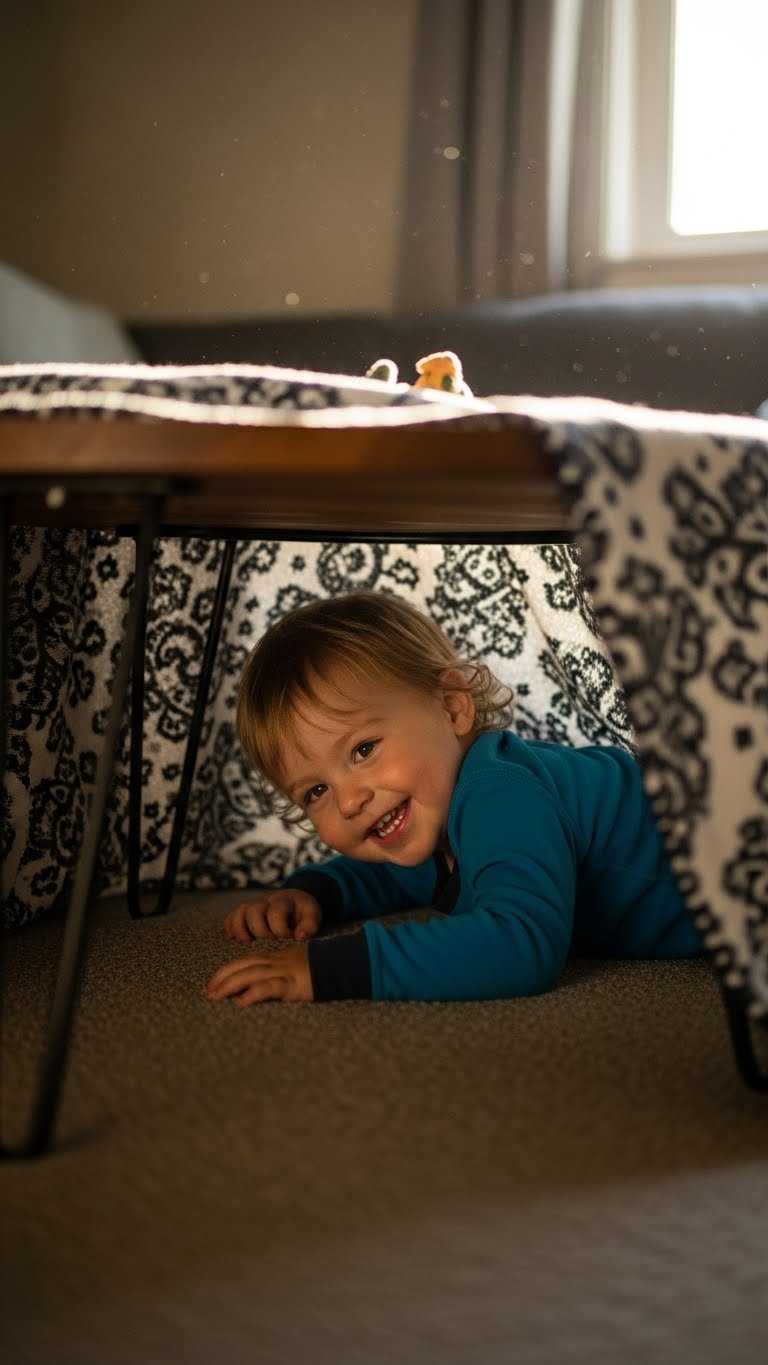
Use a low coffee table or sturdy side table. Lay a smooth blanket underneath. Kids crawl or slide through on their stomachs. This works arm strength and core muscles while feeling playful. Check that the table does not wobble. Clear the area around it. Keep the path open and well-lit. You can place pillows at the exit for a soft landing. Kids often want to repeat this station because it feels different from regular crawling. It adds variety to the course without taking up much space. When finished, the blanket folds up and the table goes back to normal use.
- Stuffed Animal Slalom
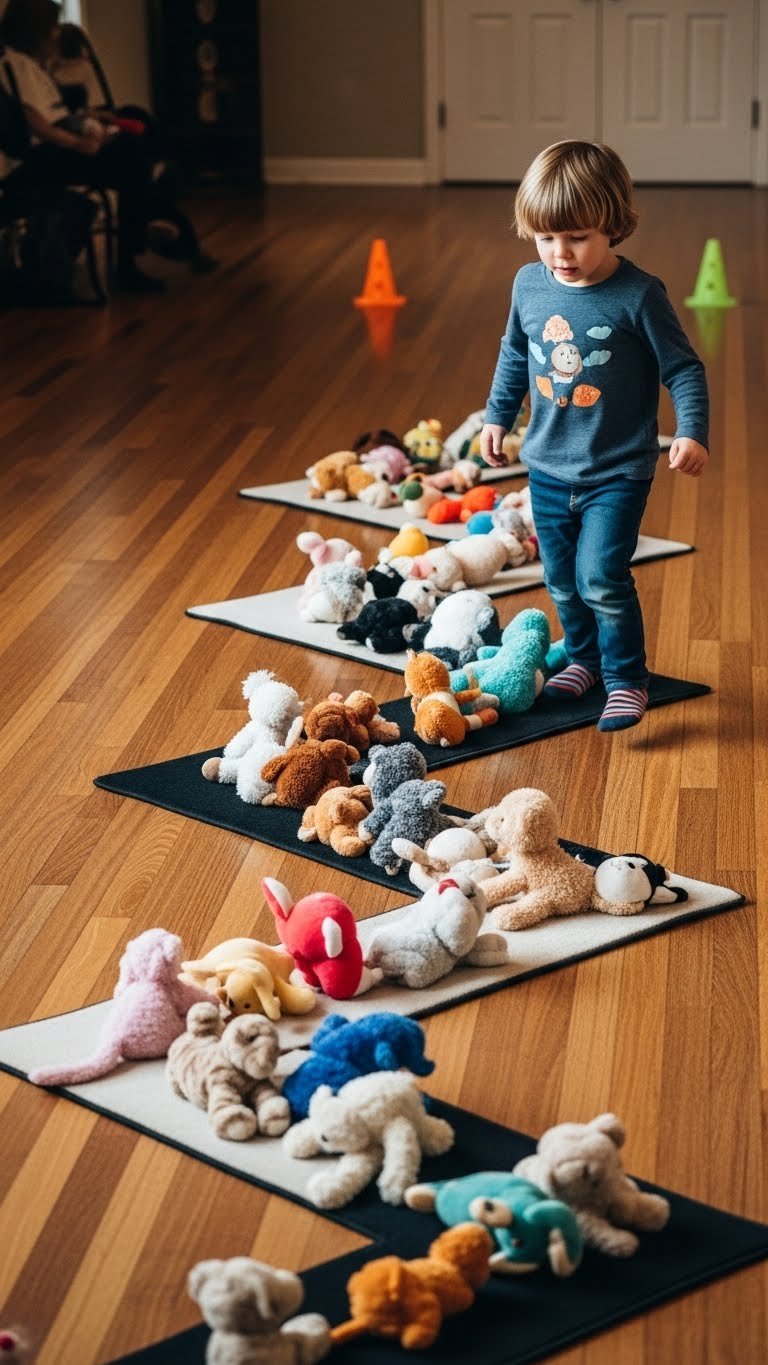
Line up stuffed animals in a zigzag pattern. Kids weave in and out without touching them. This improves agility and body control while staying lighthearted and fun. Start with wide spaces between toys. Move them closer together to make it harder. You can ask kids to tiptoe, side-step, or move slowly like a robot. This station adds color and personality to your course. It also gives stuffed toys a new purpose. When playtime ends, everything goes right back on the bed or shelf. No setup time, no cost, and no mess.
- Jump Rope Line Hops
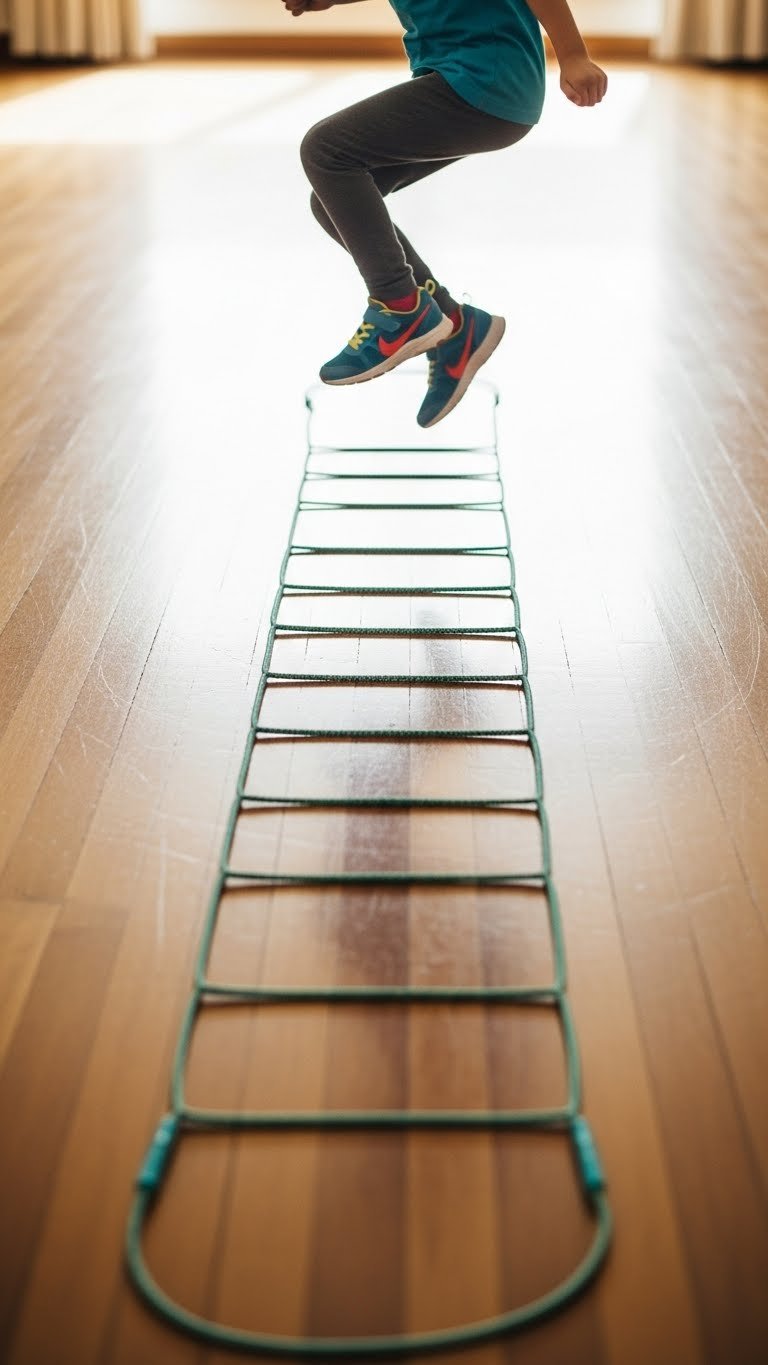
Lay a jump rope or long string straight on the floor. Kids hop over it from side to side. This simple movement raises heart rate and builds rhythm. Beginners can jump with both feet together. Older kids can try one-foot hops, forward-and-back jumps, or patterns like two hops left and one hop right. This station works well in tight spaces and does not require much setup. The rope stays still, so it feels less intimidating than real jump roping. It adds quick energy bursts to the course while staying safe and simple.
- Balloon Keep-Up Zone
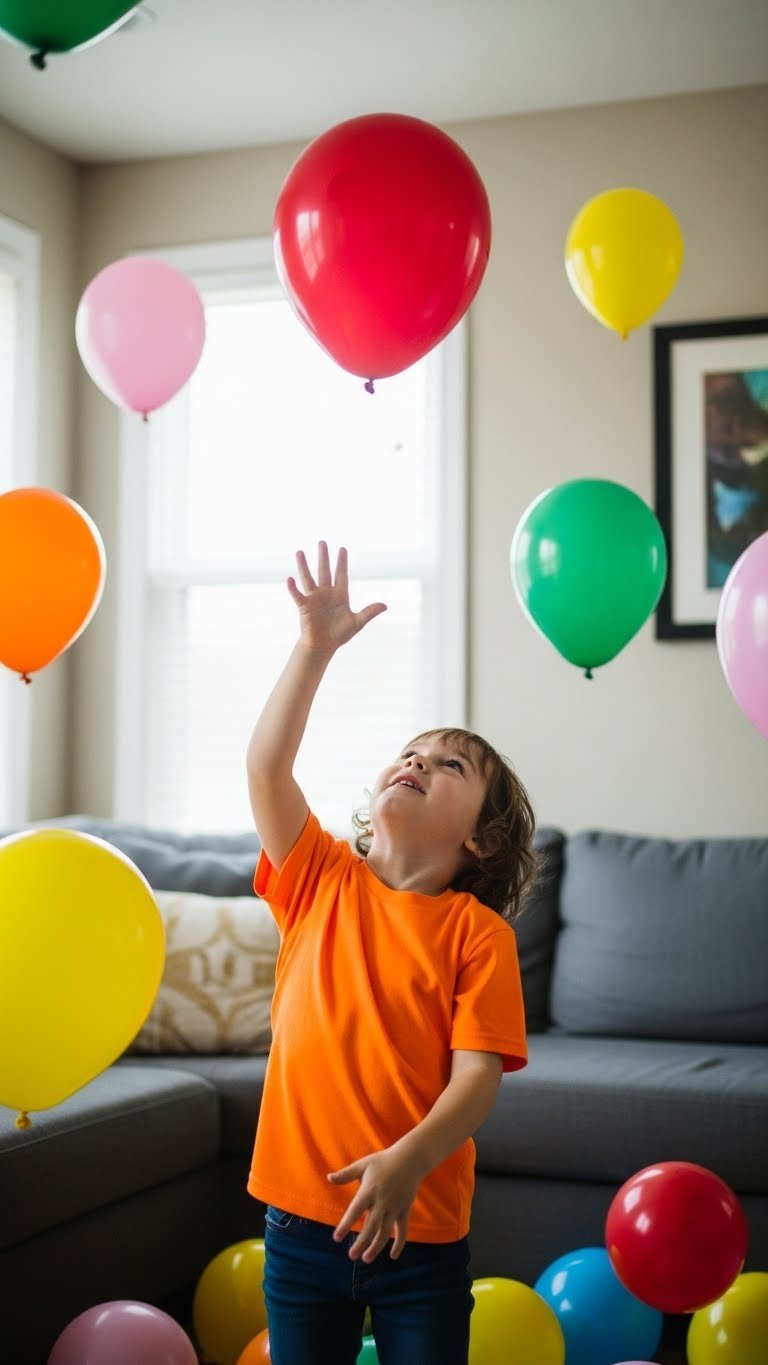
This station uses one simple item—a balloon—to create lots of movement. Kids tap the balloon into the air and try to keep it from touching the floor. Because balloons float slowly, this activity feels friendly and manageable for all ages. It encourages reaching, stretching, and quick reactions without feeling overwhelming. Set a small goal, like ten taps before moving on. You can change the rules to keep it interesting. Use only one hand. Switch hands each tap. Try gentle head taps for older kids. This station adds a lighter moment between more active sections of the course. Balloons are cheap, easy to store, and safe for indoor play. If one pops, just grab another. This zone brings laughter and calm movement together.
- Sock Slide Run
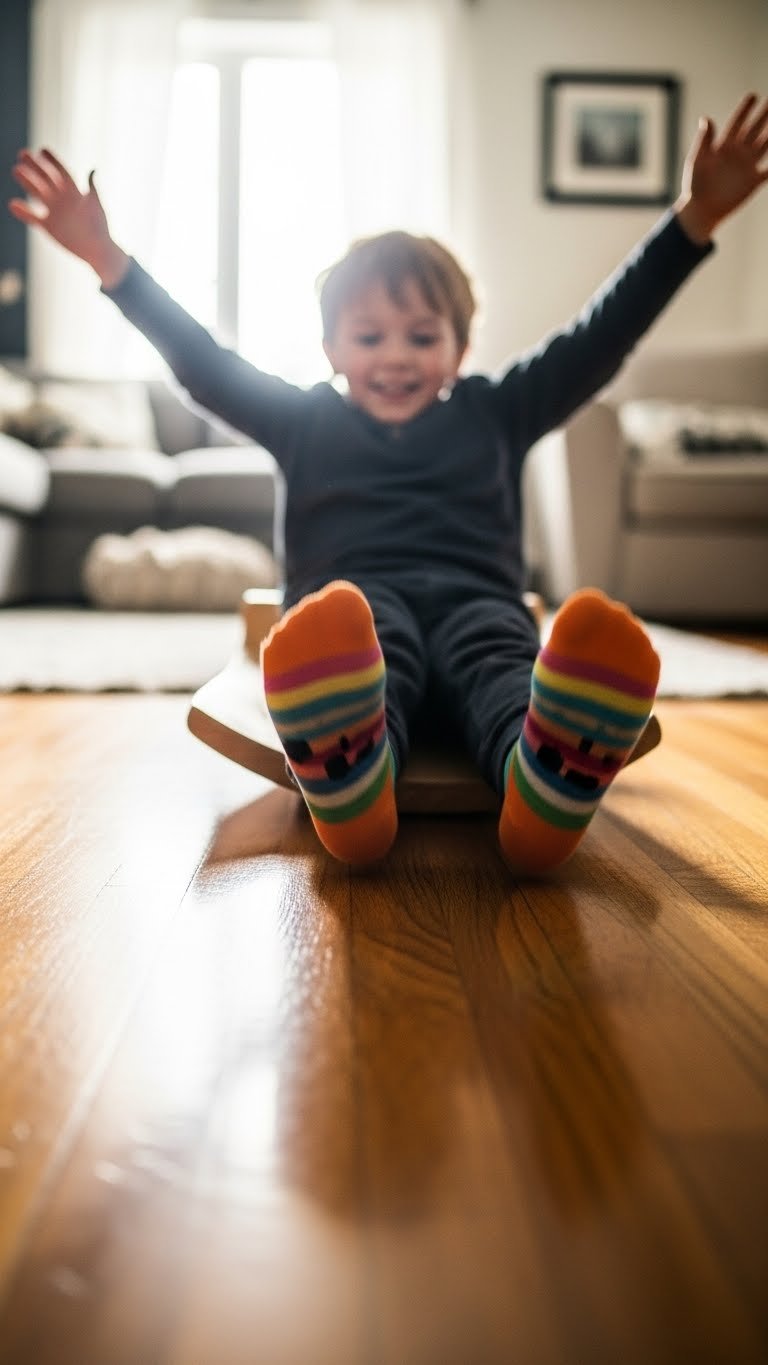
If you have smooth floors, this station becomes a favorite. Kids wear socks and slide from one taped mark to another. They run, glide, and then try to stop at the finish line without falling. This helps with balance, leg control, and safe stopping. Set clear start and stop points using tape or small objects. Make sure the path is free of furniture. Younger kids can walk-slide, while older kids can add spins or turns at the end. This station feels playful and different from regular running. It adds excitement without needing much space. Always remind kids to keep knees slightly bent for better control. Sock sliding is quick to set up and even quicker to pack away.
- Blanket Roll Crawl
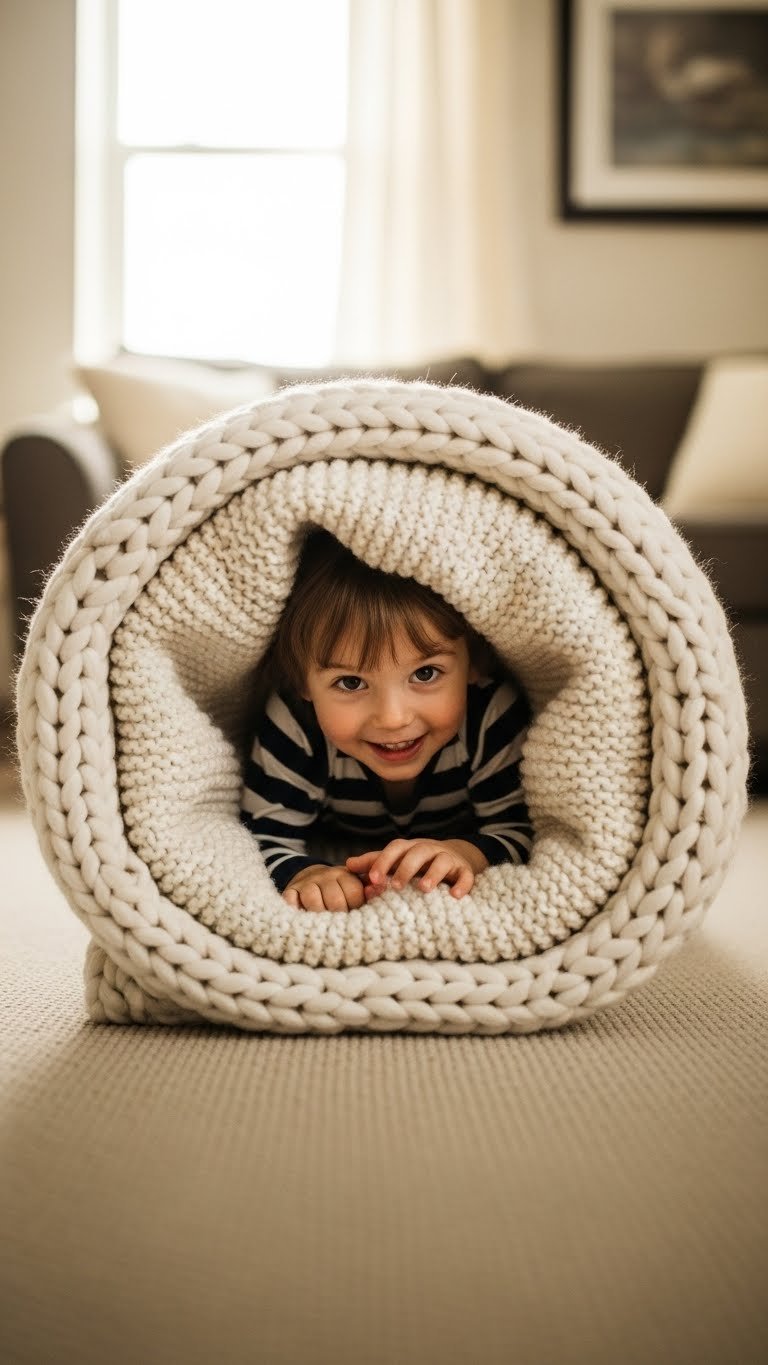
Roll a large blanket into a loose tube and place it on the floor. Kids crawl through from one end to the other. This station feels cozy and calm while still working arm and leg muscles. Make sure the blanket is not rolled too tight. Kids should be able to move easily and breathe comfortably. You can hold the ends open if needed. Add small tasks like clapping once inside or calling out their name when they reach the end. These tiny challenges keep kids engaged. This station is perfect for smaller spaces and quieter moments in the course. It also packs away easily. Just unroll the blanket and place it back on the couch or bed.
- Hula Hoop Step-In
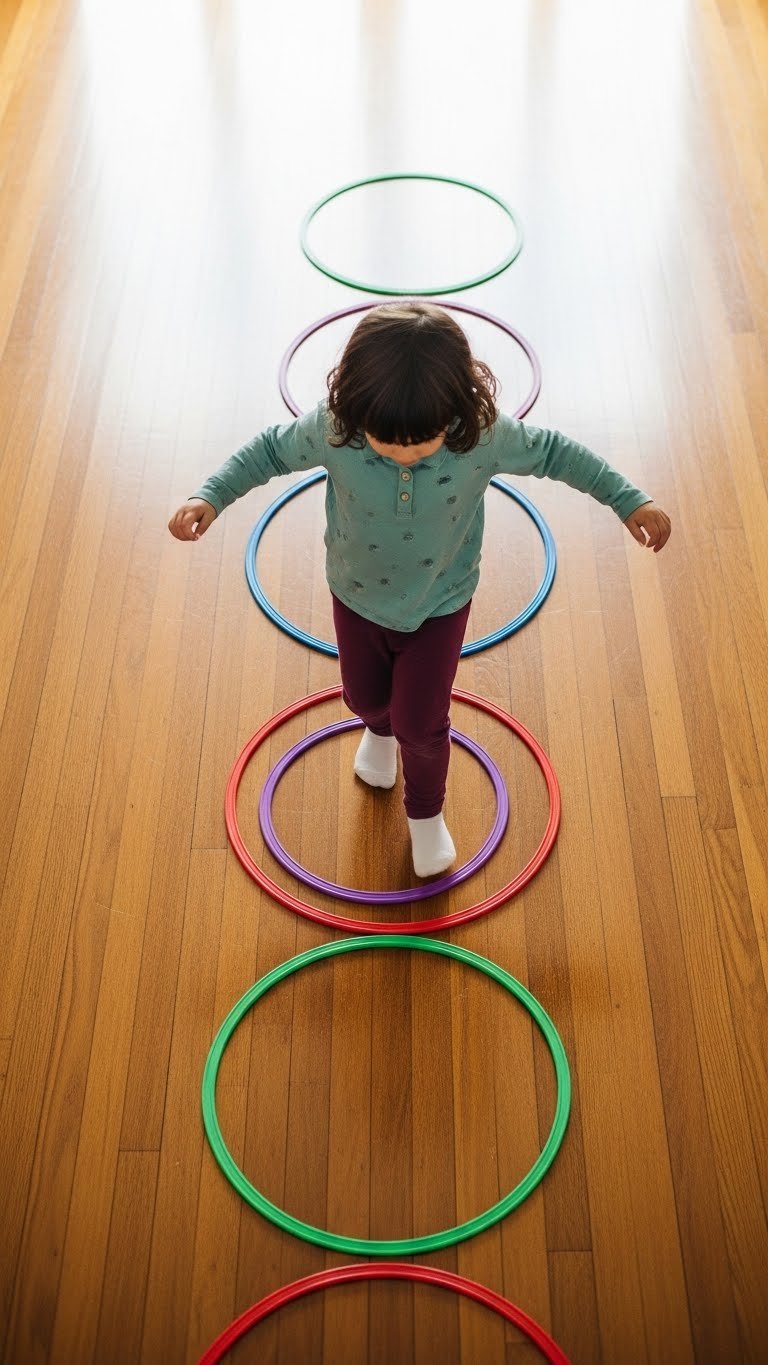
Lay hula hoops flat on the floor in a line or pattern. Kids step in and out of each hoop without touching the edges. This helps with foot placement, balance, and coordination. Start with simple patterns. Later, try zigzags or curved paths. You can ask kids to step in with both feet, hop on one foot, or skip certain hoops. This station works well for all ages. It can be slow and careful or fast and playful. Hula hoops are lightweight and easy to store. If you only have one hoop, move it forward each time instead of laying out many. This station adds structure without taking up much space.
- Book Carry Walk
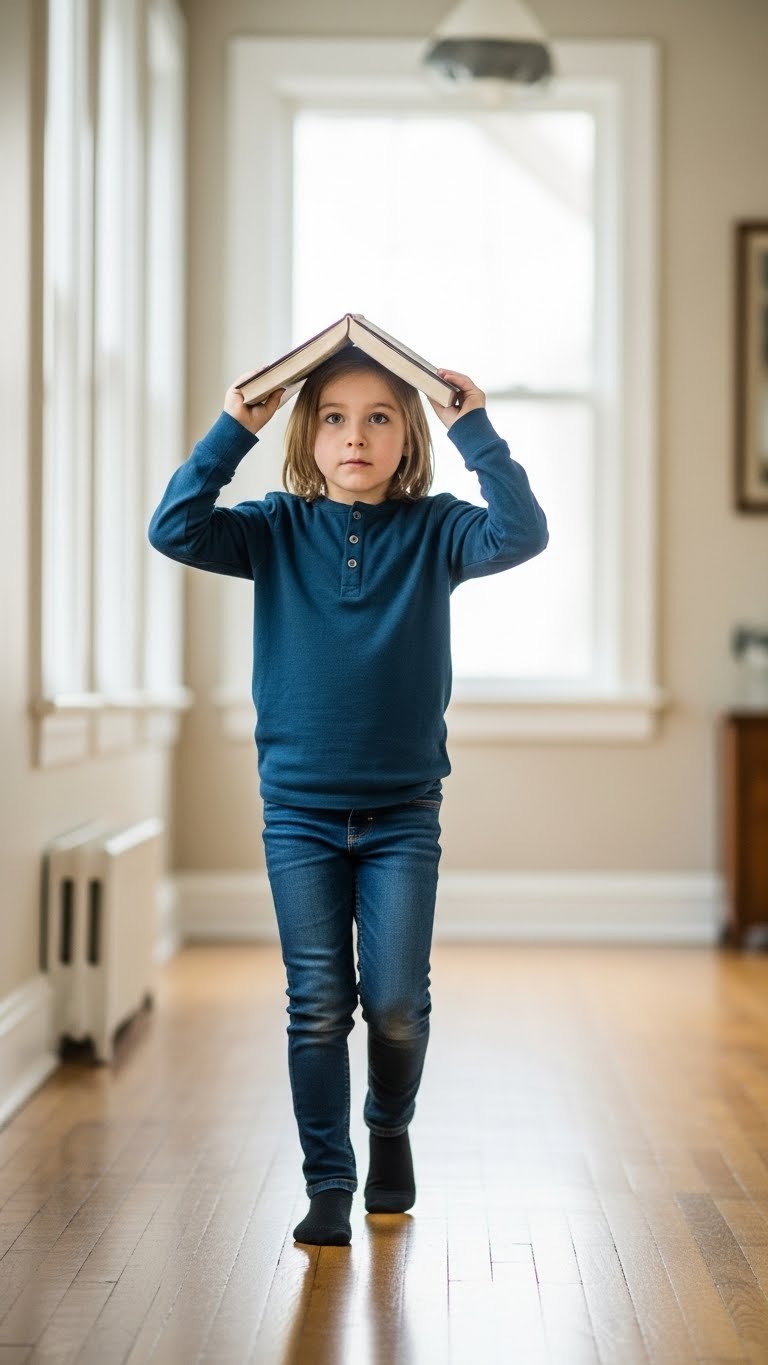
Place a lightweight book on the child’s head and ask them to walk from one point to another without letting it fall. This station encourages upright posture and slow, controlled movement. Keep the walking path short and clear. Younger kids can hold the book with one hand. Older kids can try hands-free. Add turns or small pauses to make it more challenging. This station brings calm into the course. It teaches kids to move carefully instead of rushing. It also works well between high-energy activities. Since books are already in most homes, this station costs nothing and sets up in seconds. It is simple, quiet, and surprisingly fun.
- Doorway Reach Touch
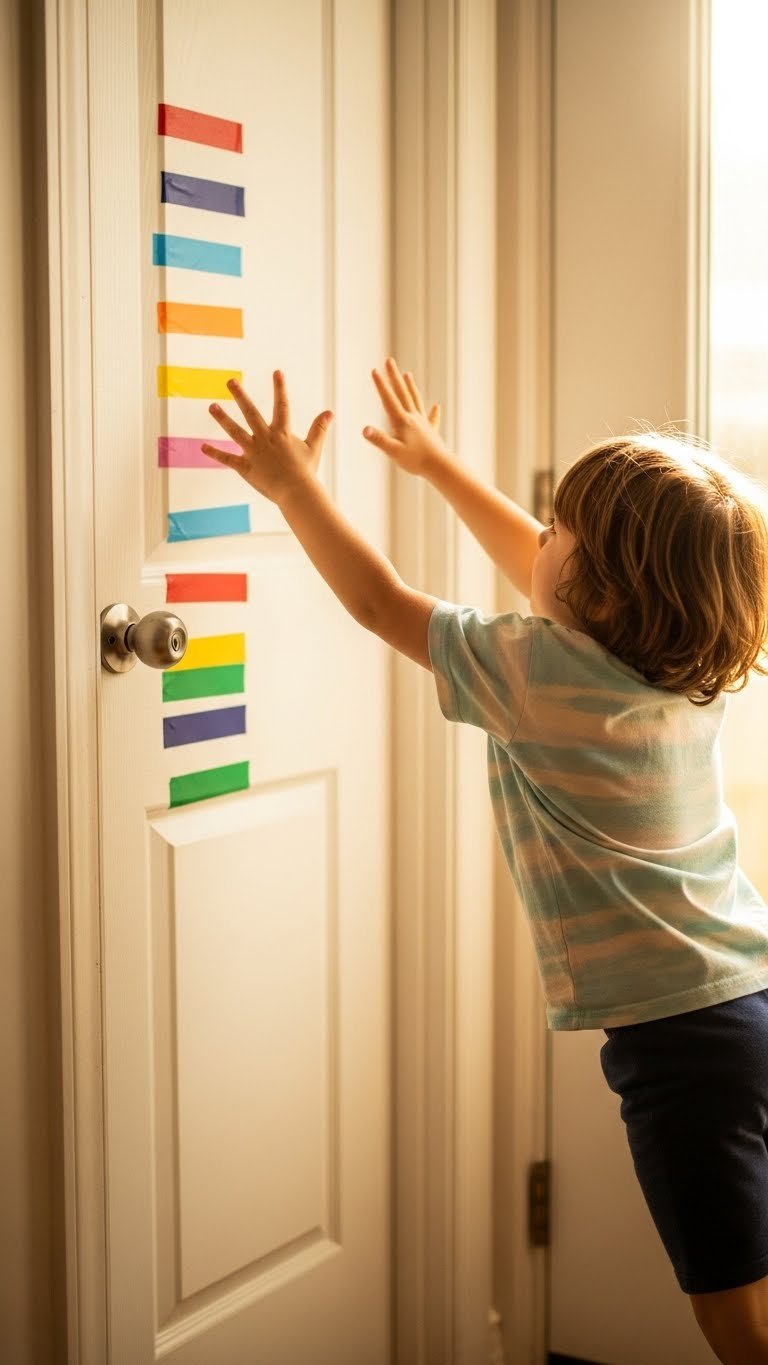
Use painter’s tape to place small marks at different heights on a doorway or wall. Kids jump or stretch to touch each one. This adds vertical movement, which is often missing in indoor play. Start with low marks for younger kids. Add higher ones for older kids. You can call out colors or numbers to guide which mark to touch next. This station helps build leg strength and body awareness. It also encourages full-body movement. Keep jumps controlled and remind kids to land softly. Doorway reach touches take up almost no space and require only tape. They are quick to change and easy to remove when playtime ends.
- Rolling Toy Push
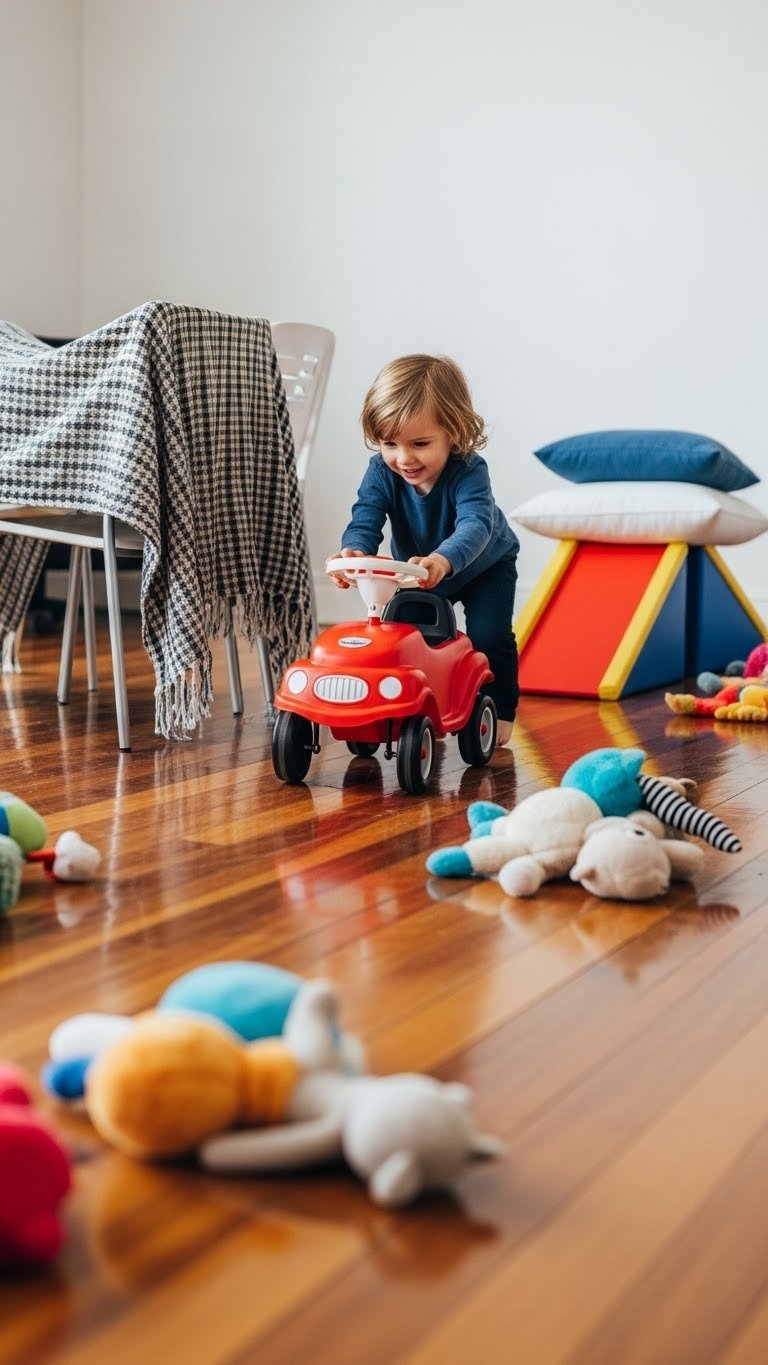
Give kids a toy car, ball, or anything that rolls easily. They push it across the room using only their hands. This station works arm strength, coordination, and steady movement. Mark a straight path with tape or use furniture as guides. Kids can push slowly or race against a timer. For added fun, place small obstacles along the way that they must avoid. This station changes the usual running and jumping pattern. It brings focus and control into the course. Since toys are already around, no extra setup is needed. When finished, the toy goes right back to its shelf.
- Corner-to-Corner Run
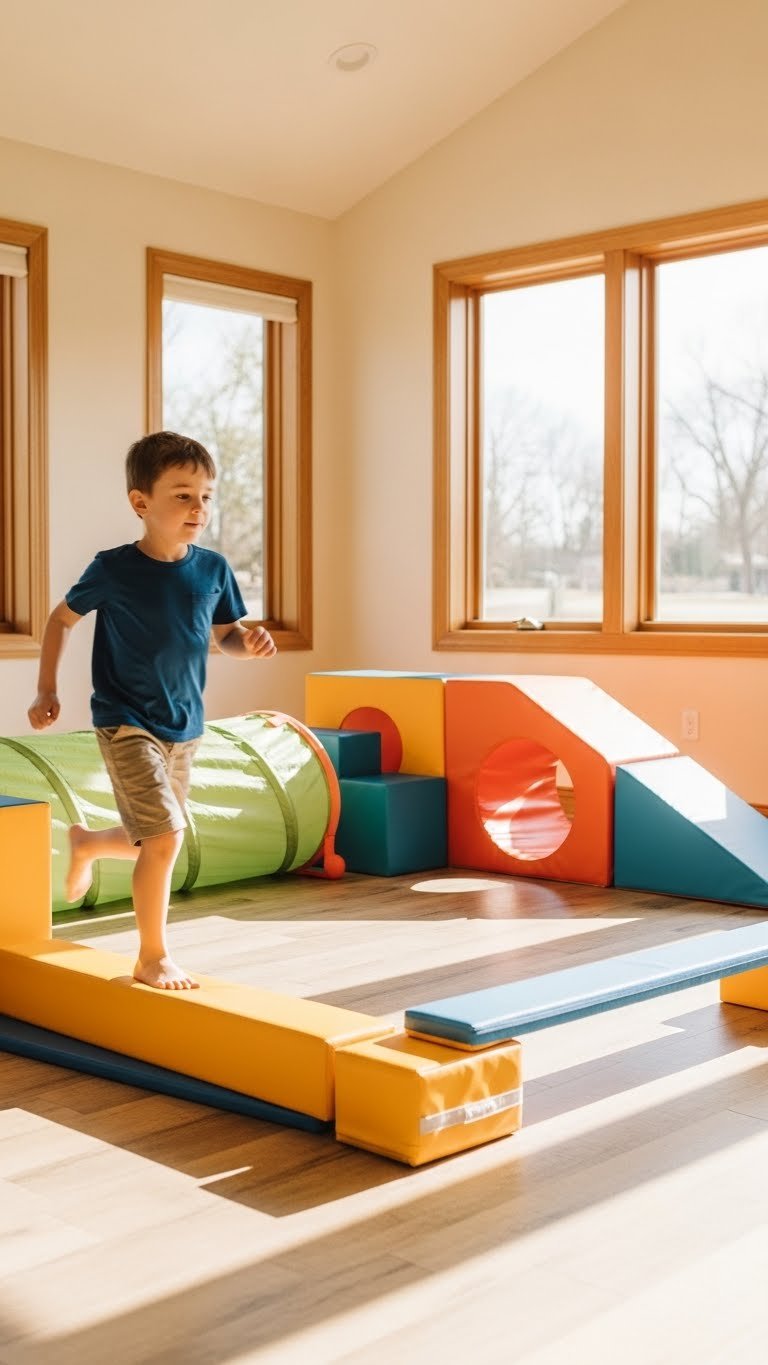
Choose two opposite corners of the room and mark them with tape or pillows. Kids run from one corner to the other as fast or as controlled as you want. This station quickly raises energy levels. You can add rules like touching the wall before turning back, spinning once, or clapping twice before running again. These small changes make each round feel new. This station works best in open spaces like living rooms or playrooms. It is simple but very effective for burning energy. Because it needs no equipment, it is one of the easiest stations to set up. It also makes a great final burst before calmer activities.
- Soft Toy Carry
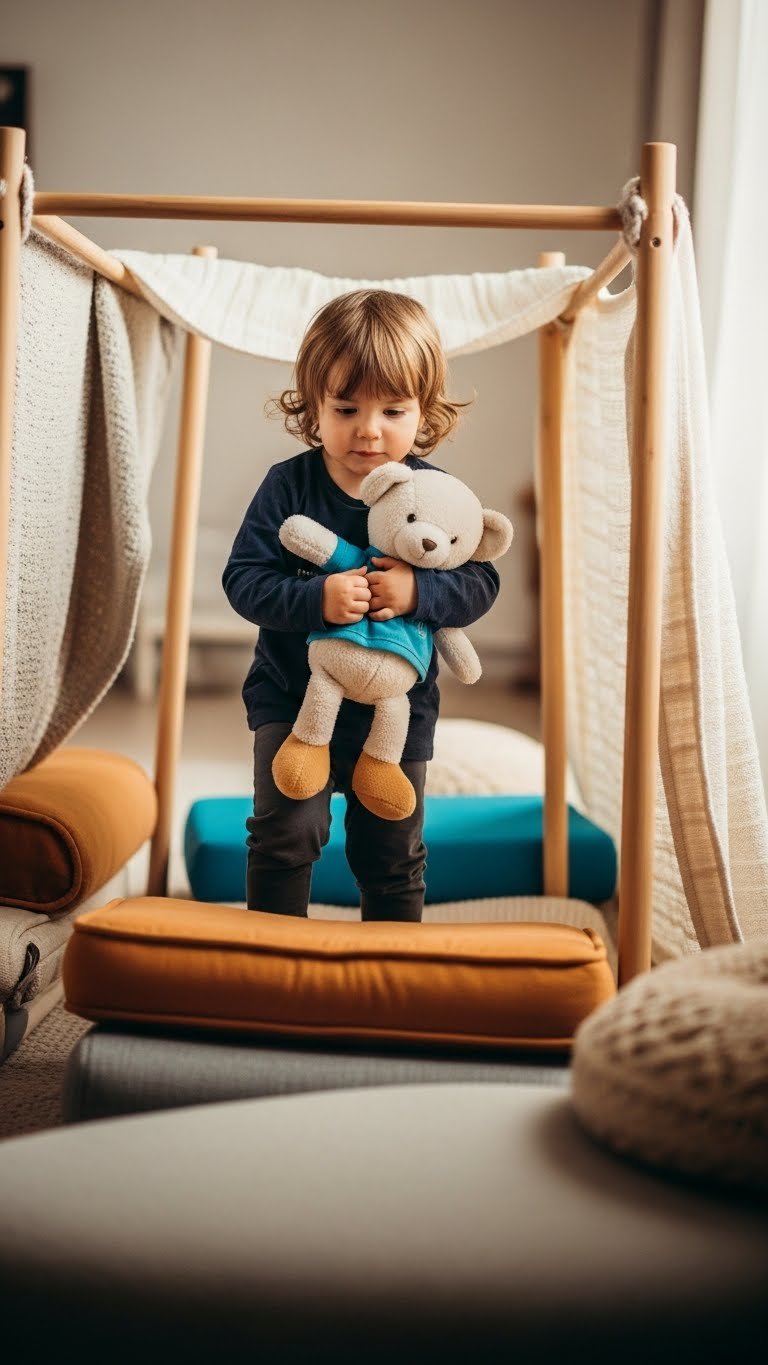
In this station, kids carry a stuffed animal from one point to another without dropping it. This sounds easy, but it takes focus and steady movement. Younger kids can use both hands. Older kids can try using only one hand or holding the toy on their shoulder. You can place small obstacles along the path, like pillows or tape lines, to make it more interesting. Encourage slow steps rather than rushing. This helps with balance and body control. Soft toy carry is a calm moment in the course. It gives kids a short break from jumping and running while still keeping them active. Since stuffed toys are already in most homes, this station costs nothing and sets up in seconds. It also adds a playful, caring element to the course.
- Wall Push Hold
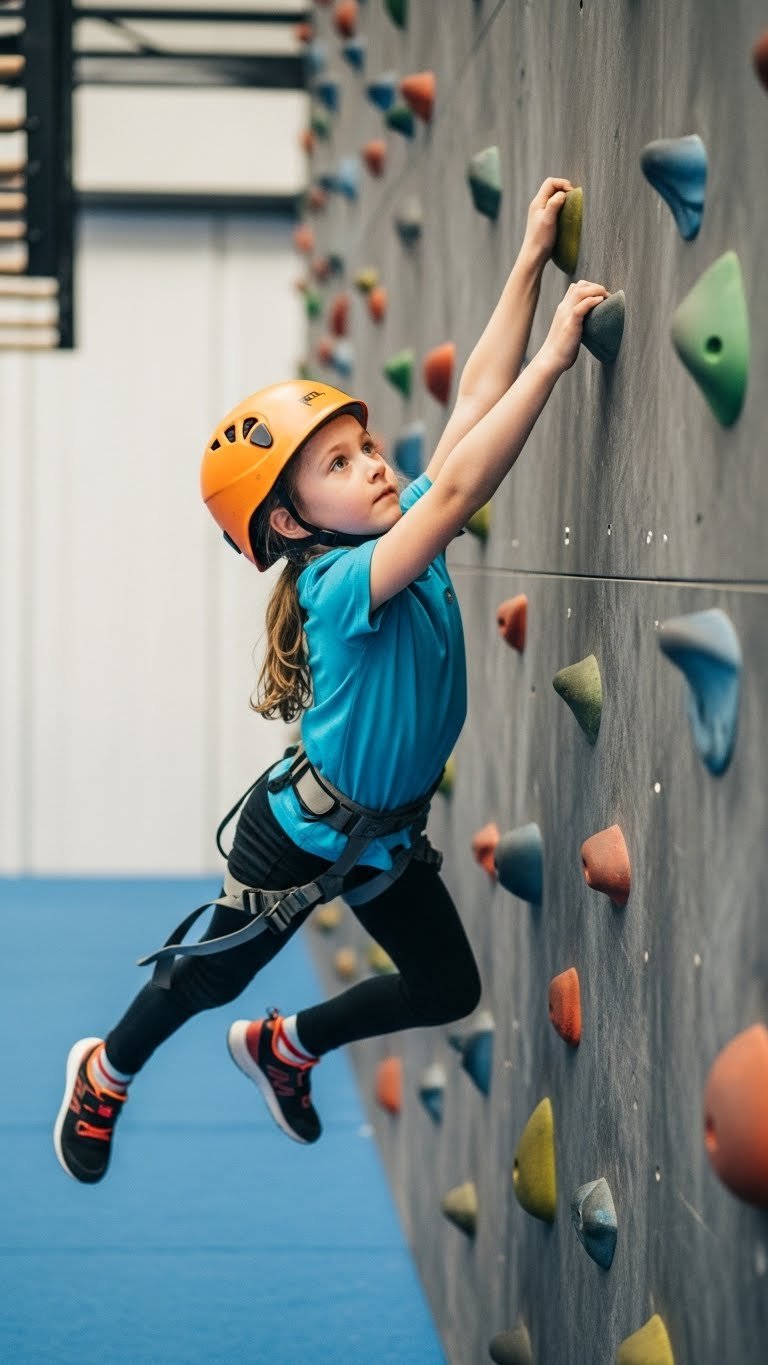
Ask kids to stand facing a wall and place their hands flat against it. They lean forward slightly and push while keeping their body straight. Hold this position for a slow count of ten. This station works arm strength, core muscles, and posture. It is safe and controlled, making it a good choice for indoor play. You can turn it into a game by counting out loud together or playing soft music during the hold. For younger kids, keep the count short. Older kids can try longer holds or repeat the station twice. This activity adds a strength moment without needing any equipment. It also helps balance out more active stations like running and jumping. Wall push holds are simple, quiet, and easy to add anywhere.
- Toy Cleanup Dash
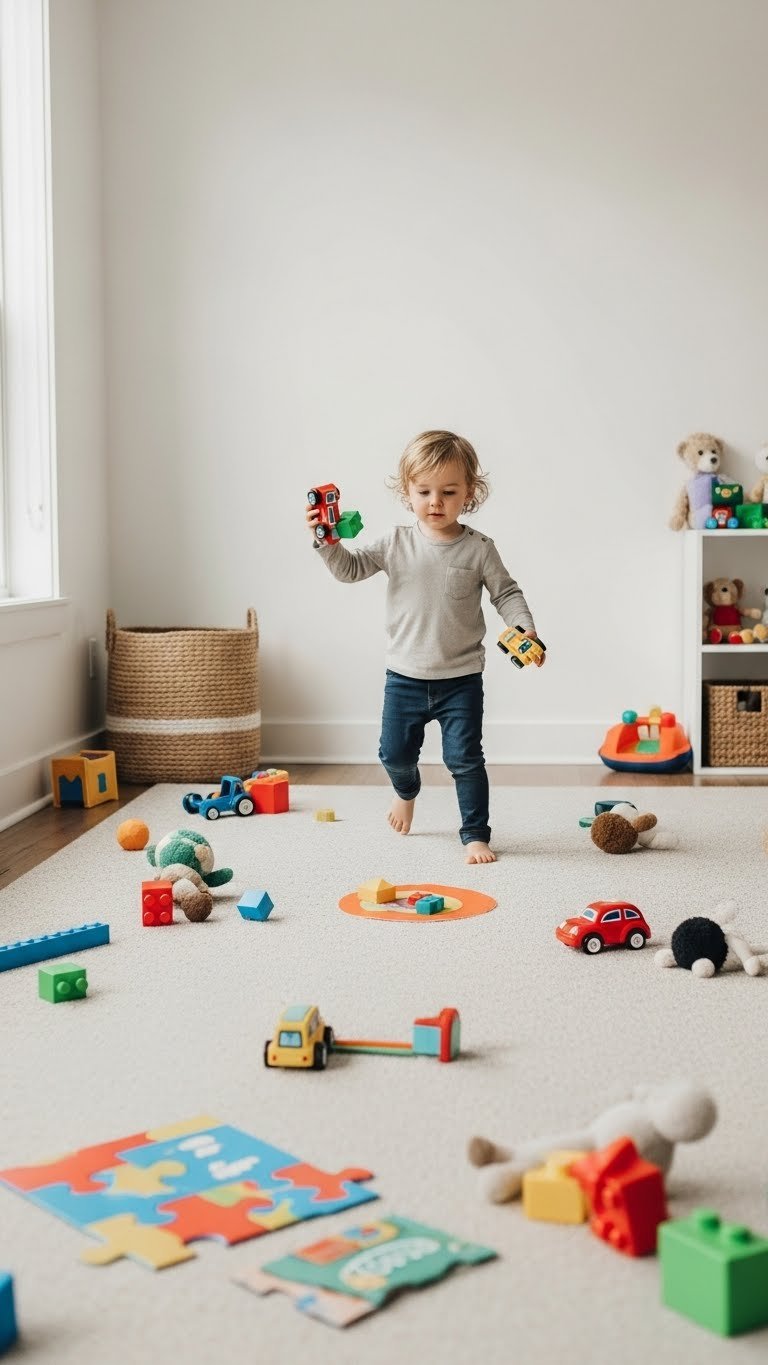
Scatter a few toys on the floor and place a bin or basket nearby. Kids race to pick up the toys and place them into the container. This station mixes movement with responsibility in a fun way. You can make it more exciting by using a timer or counting how many toys they can pick up in thirty seconds. Younger kids can walk, while older kids can jog or hop.This station is perfect near the end of the course because it helps tidy the room. Kids feel proud when they finish and see a cleaner space. It teaches that cleanup can be active and playful. Best of all, it requires no extra items and saves time later.
- Couch Cushion Slide
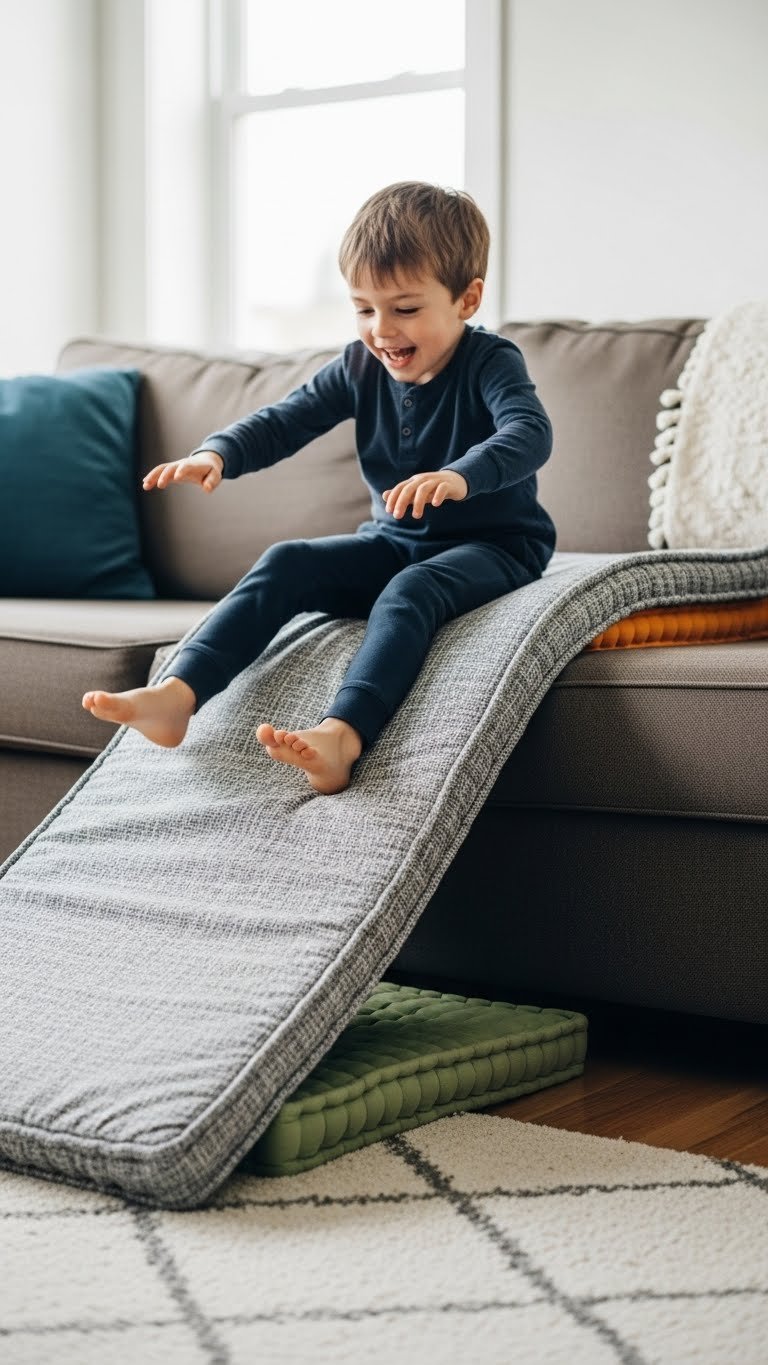
Lean a couch cushion against the sofa to create a gentle slope. Kids climb up and slide down. Keep the height low and always supervise. This station adds a sense of adventure while staying safe. Place a rug or mat at the bottom for a soft landing. Kids can slide sitting down or on their stomachs, depending on what feels comfortable. You can add rules like sliding slowly, clapping at the bottom, or spinning before climbing back up. This keeps things playful without making it risky. Couch cushion slides use furniture you already have. They add variety to the course and often become a favorite station because they feel special and different from regular movement.
- March and Clap Path
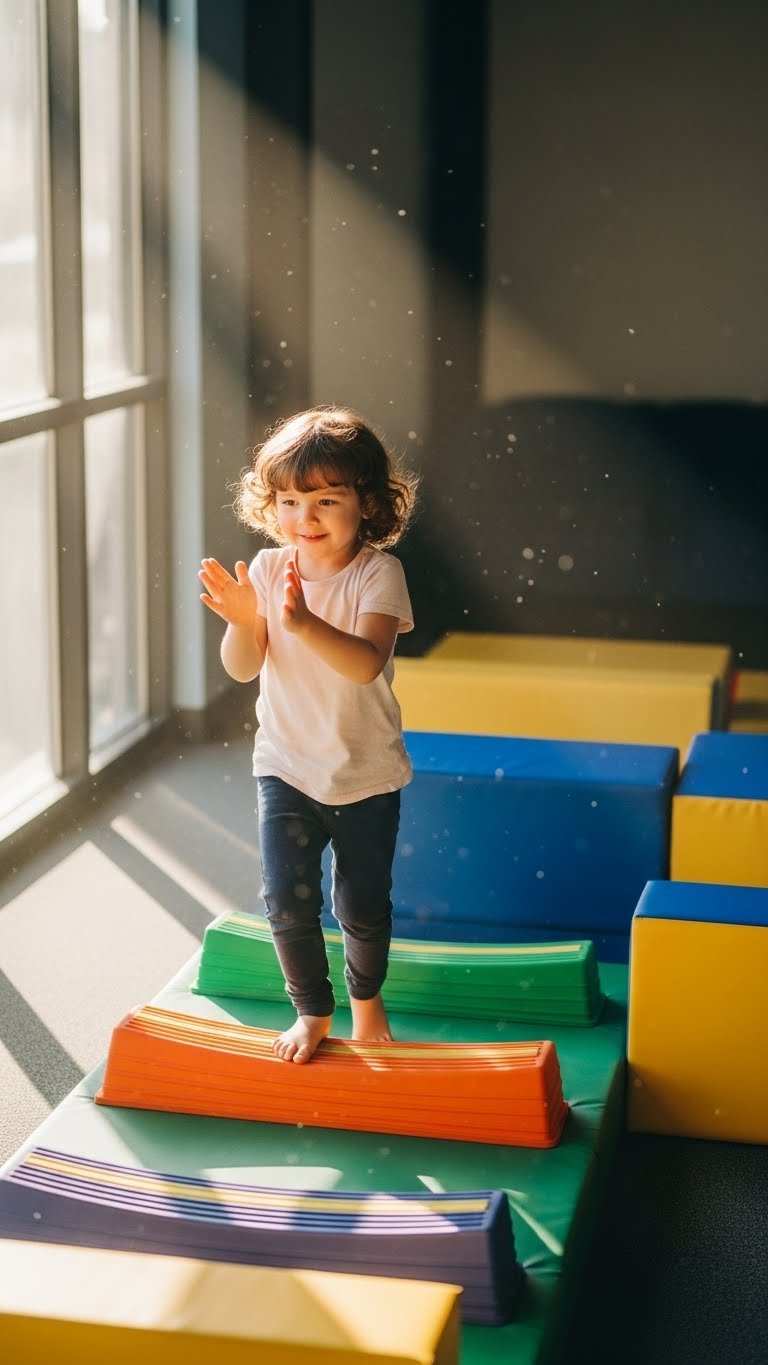
Mark a short path using tape or pillows. Kids march along it while clapping their hands in rhythm. This station focuses on coordination between hands and feet. Change the speed to keep it interesting. Slow marches feel calm. Fast marches feel energetic. You can also call out patterns like two claps, one stomp, or clap overhead. This station works well in small spaces and adds sound and rhythm to the course. It is a good choice for kids who enjoy music and movement together. March and clap paths are easy to reset and take only seconds to set up. They help kids stay active without jumping or running, making them a great balance station.
- Backward Walk Line
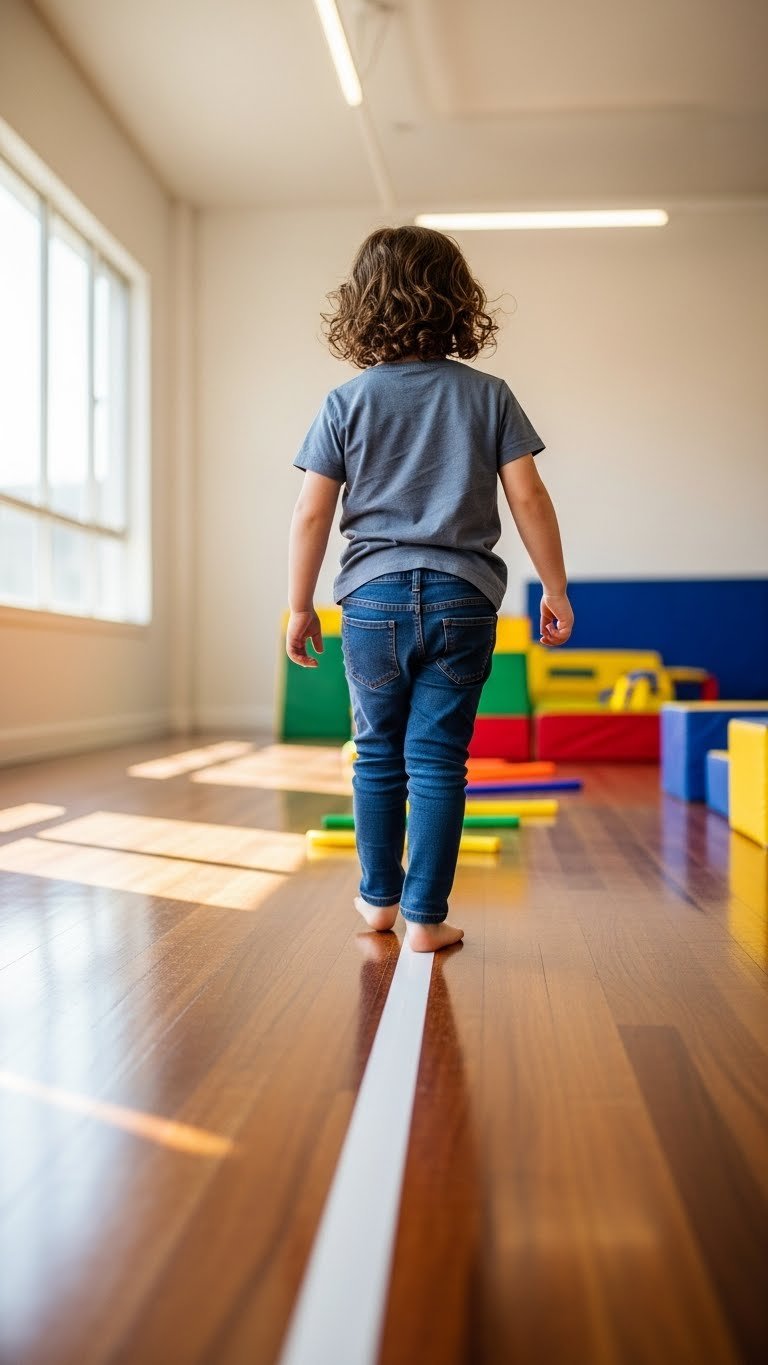
Place a strip of tape on the floor. Kids walk backward along it, trying to stay on the line. This station challenges balance in a new way. Ask kids to move slowly and look straight ahead. You can hold their hand if they feel unsure. Older kids can try closing one eye or adding small pauses. Backward walking uses different muscles than forward walking. It also encourages body awareness. This makes it a great addition to any obstacle course. This station costs nothing and works in tight spaces. It adds variety and keeps kids curious. Many find it tricky at first, which makes it more fun to repeat.
- Reach and Stretch Stop
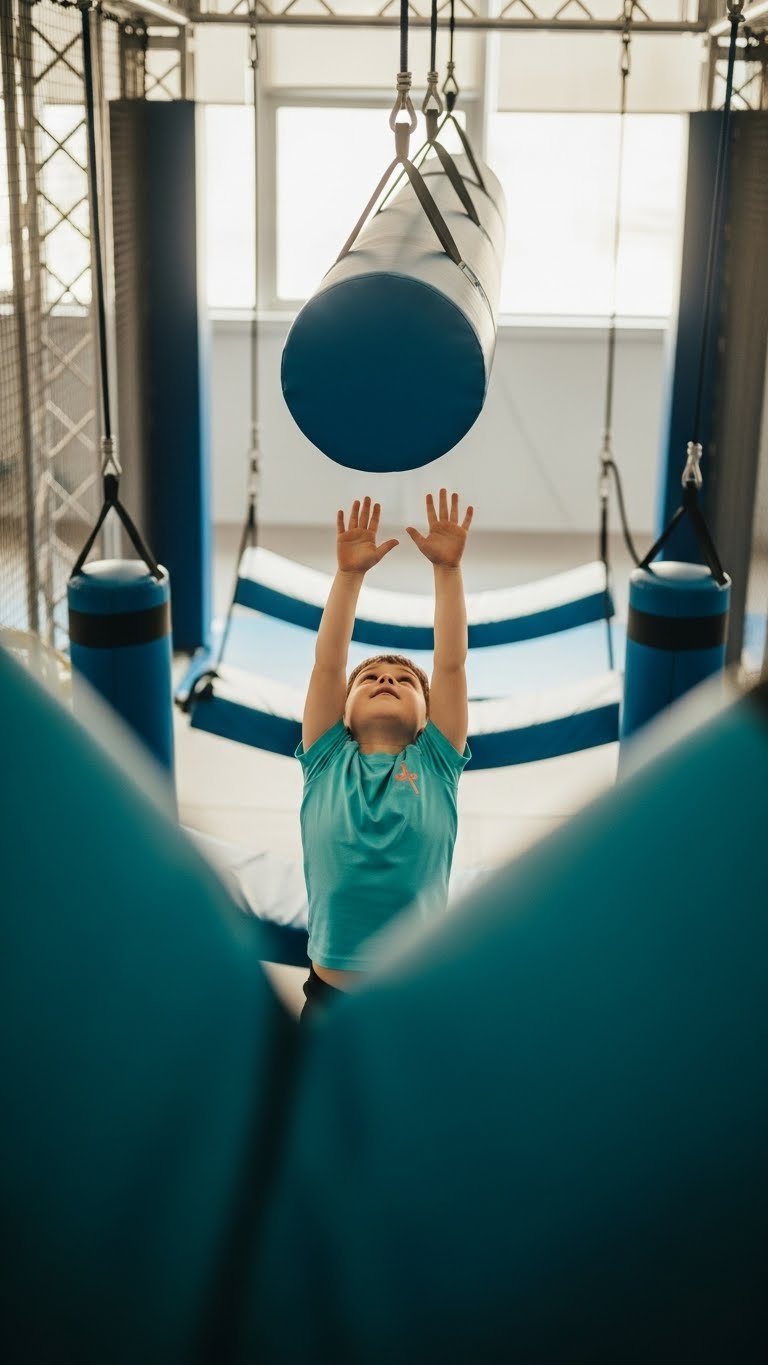
This station focuses on gentle movement and recovery. Kids reach their arms high, then touch their toes, then stretch side to side. Hold each stretch for a slow count of five. You can guide them with simple directions like “reach for the sky” or “touch the ground.” Add deep breaths to make it calmer. This station helps relax muscles after active sections. It also teaches kids to slow down and listen to their bodies. Reach and stretch stops work well between high-energy stations or near the end of the course. They require no space or equipment and help prevent kids from feeling too tired.
- Finish Line Freeze
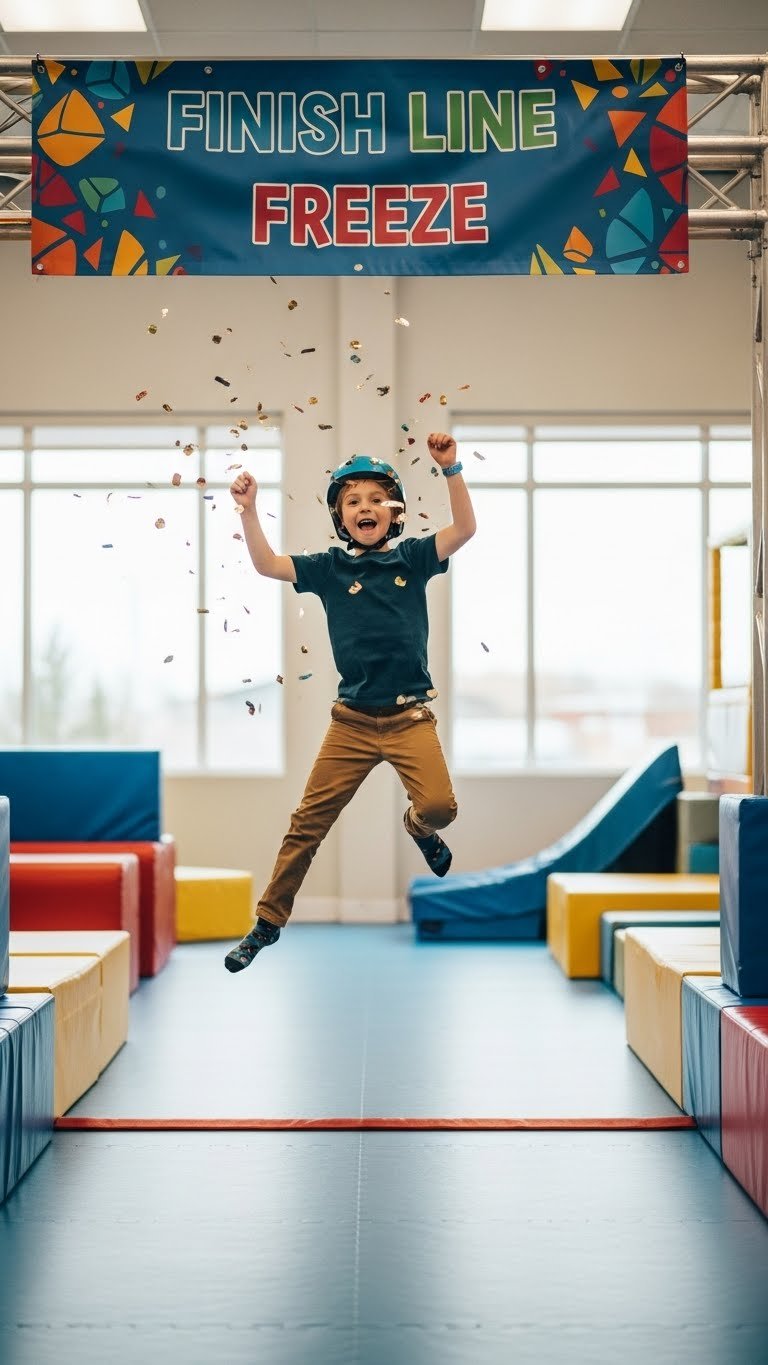
Mark a finish line with tape, a scarf, or a pillow. When kids cross it, they must freeze in a fun pose. They can pretend to be a statue, an animal, or a superhero. Hold the freeze for five seconds before relaxing. This adds laughter and a clear ending to the course. You can change the theme each day, like silly poses or strong poses. This keeps it exciting even after many repeats. Finish line freeze gives kids a sense of completion. It also helps calm their bodies after movement. This station requires no setup and leaves everyone smiling, which is a perfect way to end the course.
Conclusion
Indoor obstacle courses prove that active play does not require special tools or large spaces. With simple items like cushions, tape, boxes, and toys, you can create movement that feels fun and natural. These setups keep kids engaged, help release energy, and break up long indoor days. They also invite creativity, since no two courses ever need to look the same. The best part is how easy it is to start. Pick a few stations, clear a small area, and let the fun begin. You can swap activities, adjust difficulty, or shorten the course based on mood and time. This keeps things interesting without extra effort. When adults join in, the experience becomes even better. Shared play builds connection and adds laughter to everyday routines. Over time, these small moments of movement can become a regular habit that everyone looks forward to. Choose a few ideas, set them up today, and watch your space come alive with motion.
